
Ten years. Ten plays. One of them ran 7,000 performances in 8 countries, and the last time I checked it had played to more than a quarter million people. I did not know I was learning marketing. I thought I was learning how to write for the stage.
The two things turn out to be the same discipline with different names.
What the Stage Teaches You That a Desk Does Not
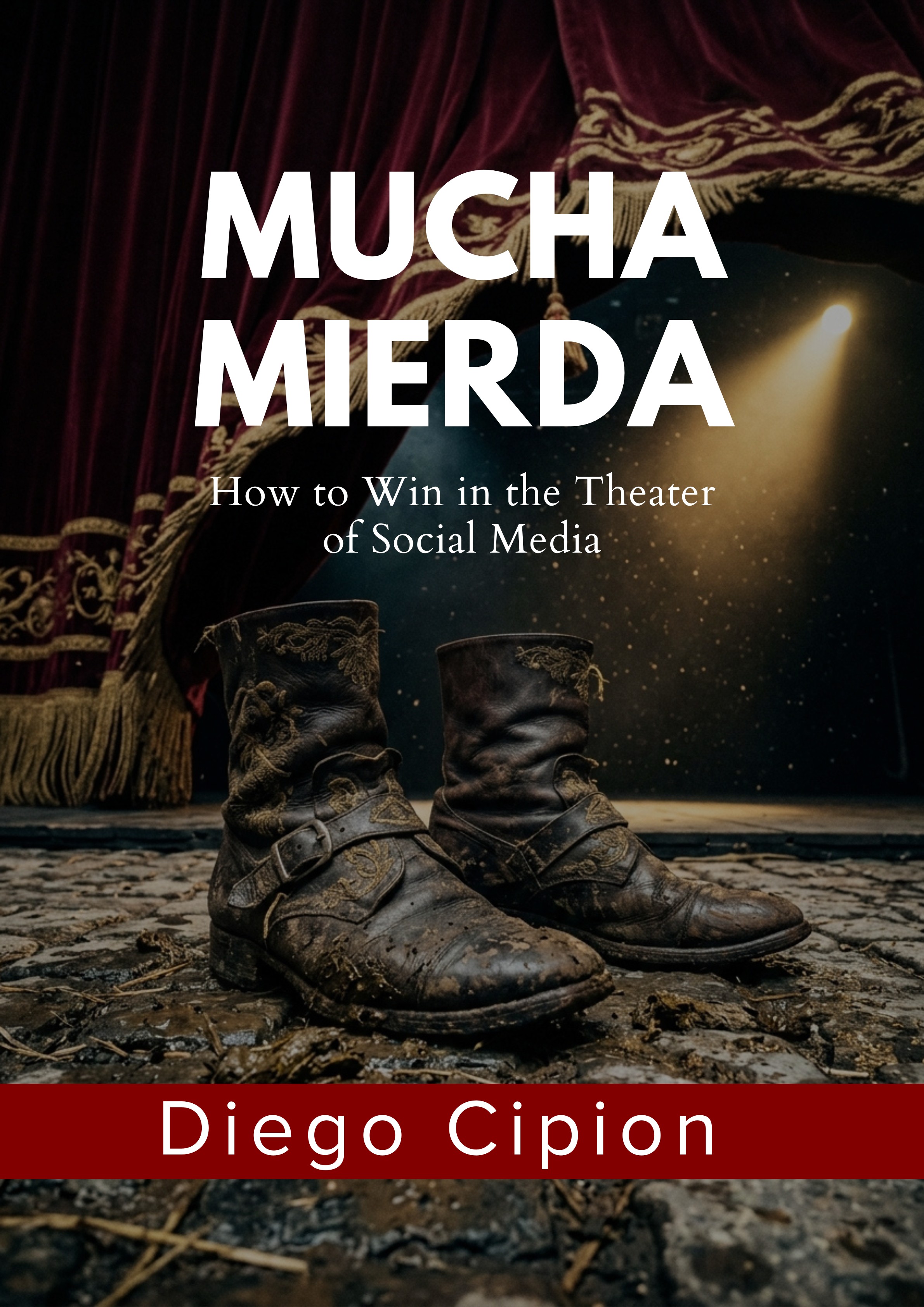
Mucha Mierda — Break a Leg
The book about the specific failure that comes before something real. Written by someone who has been there.
Get it on Amazon →In theater, you cannot hide. Every word is exposed. There is no design to distract, no image to compensate, no scroll to escape. If the writing is weak, the silence in the room tells you immediately. The audience does not close a tab or scroll past. They go quiet in a particular way that every playwright learns to read in their stomach before their brain catches up.
Marketing on a screen hides behind production values. A bad line of copy can survive because the image was good. The stage does not offer that shelter. Weak writing on a stage is naked. It trained me to write sentences that do not need anyone else's work to keep them standing.
Three Rules the Stage Gave Me That I Apply to Every Brief
If you want copy that actually converts, the same discipline applies to your brand. I work with a small number of clients each quarter on exactly this.
See how Cipion Marketing worksStart in the middle of the action. Nobody cares about your backstory. Theater calls it in medias res: drop the audience into the situation at its point of maximum tension. Every brief I write for a client starts with the conflict, not the context. Every piece of copy I write starts with what is at stake, not with who the brand is. The brand earns the right to explain itself after it has already earned attention.
One character, one want. The clearest copy I have ever written is copy where I know exactly what the reader wants and name it in the first sentence. Theater taught me that an audience can only hold one want at a time. When a play tries to make the audience feel four things simultaneously, they feel nothing. Marketing briefs that try to speak to five personas at once produce copy that speaks to none of them. Pick the one thing. Say it clearly. Everything else is noise.
The ending has to earn it. In theater, the final image is everything. The audience leaves carrying it. In copy, the call to action is that final image. If the writing that preceded it has not done its work, no button label saves the situation. The CTA is not where the conversion happens. The conversion happens in the three sentences before it. The button just records the decision.
Why I Wrote Mucha Mierda as a Book, Not a Play
Mucha Mierda is the theatrical good-luck phrase in Spanish, the equivalent of "break a leg" in English theater. The book is about the specific kind of failure that comes right before something real. Not the failure that ends things. The failure that proves you were serious about something worth doing.
I wrote it as a book because I wanted the internal dialogue, the pauses between decisions, the thoughts that do not make it to the stage because theater is action and books are the space between actions. The stage version of this story would be a character who does things. The book version is a person who thinks, which is closer to how failure actually feels when you are inside it.
Mucha Mierda (English edition) Available on Amazon →What This Means for Your Marketing Copy
The single most common problem in brand copy is that it is written for the brand, not for the audience. Theater does not work that way. The play exists for the people in the seats. The moment you write a sentence that serves the playwright's ego instead of the audience's experience, you have broken the contract.
Marketing copy breaks the same contract in the same way. "We are a forward-thinking team of passionate experts committed to your success" is a sentence written for the brand, not for the reader. It says nothing about what the reader gets, feels, or decides. It is theater written for the playwright. That is not theater. That is a wall of text.
Three questions I ask before finalizing any piece of copy: Does this sentence earn its place? Would the audience already know this? Does this move us forward or just fill space? The third question is the cruelest. It is also the most important. Most of the copy I have rewritten over twenty years was not wrong. It was just occupying space that belonged to silence.