
I did not build toward a medal. I built toward the work. The Medal of Honor from the Mayor of Miami was the result of a period where I had decided that the only measure that mattered was whether what I was making was genuinely good. Not good for the budget. Not good for the timeline. Not good for my profile. Good.
That period was the theater years in Miami, after I had moved from Spain and was still doing the thing I knew how to do because stopping felt like the wrong answer. The recognition came later, unsolicited, and it was meaningful precisely because I had stopped optimizing for it.
What Building Something Worth Recognizing Actually Requires
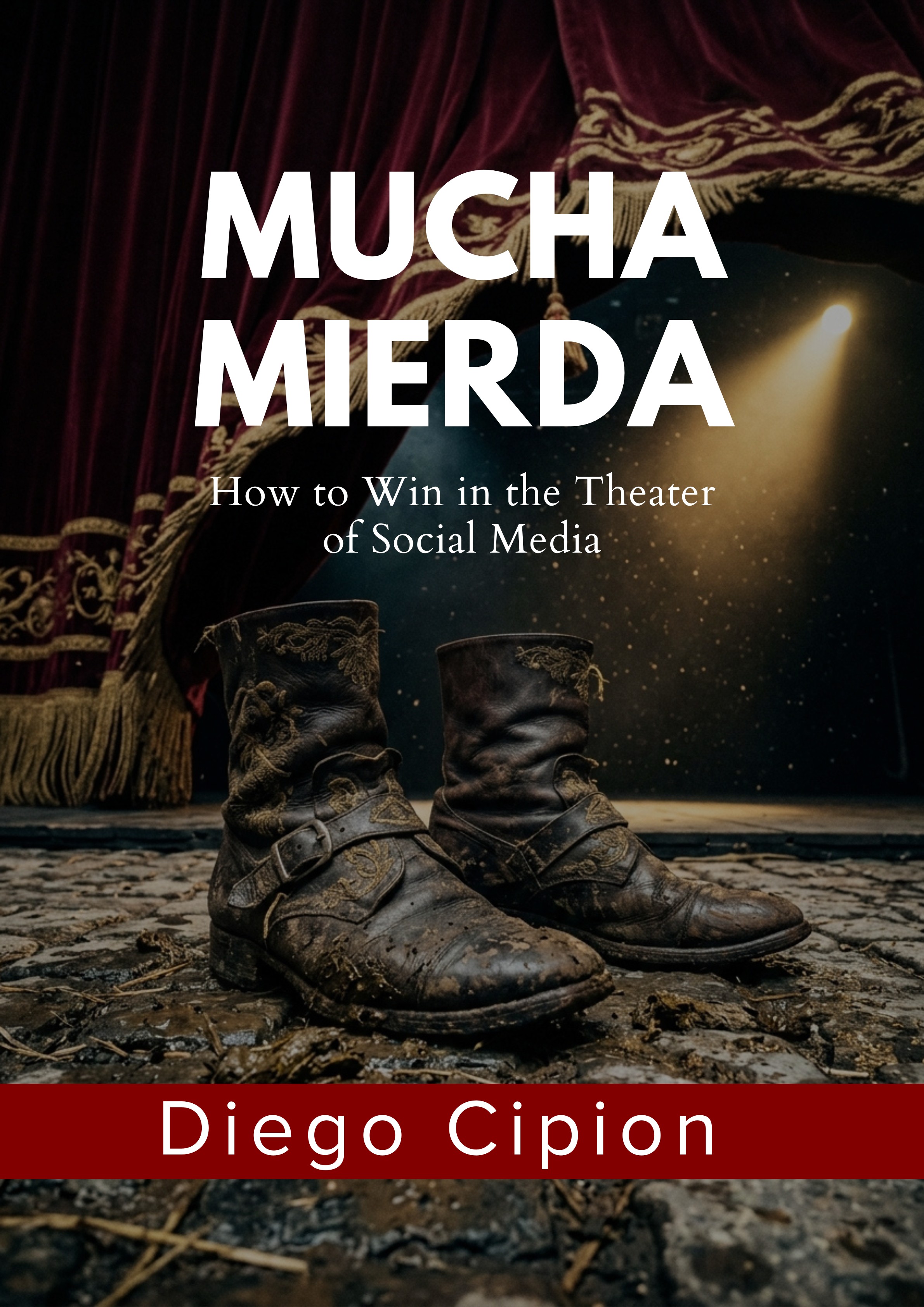
Mucha Mierda — the book behind the recognition
Not about the medal. About the period that made it possible. Available in Spanish and English on Amazon.
Get Mucha Mierda on Amazon →Volume and consistency over a long period. You do not receive recognition for one good thing. You receive recognition for a sustained body of work that makes an undeniable claim on attention over time. The plays I wrote in Madrid ran for years. The recognition in Miami came after years of production there. There is no shortcut in the timeline. You can compress the quality of the work. You cannot compress the duration.
Community relevance, not just personal achievement. The medal was about contribution to the city's cultural life, which means the work mattered to people who were not me. That is a different metric than personal satisfaction or professional output. The question is not "did I make something good?" The question is "did what I made change something for the people it was made for?" Those are different questions with different implications for how you work.
Willingness to be in the room. You cannot receive recognition for work that is not seen. This sounds obvious and it is surprisingly easy to avoid. Producing good work privately is more comfortable than putting it in front of audiences who might not respond. The theater years required showing up in rooms where I had no guaranteed reception. That exposure was the cost of the recognition that came later.
How This Shapes How I Think About Brand Building
The same principles that build recognition over time are what I apply to brand GEO programs at Cipion. Authority compounds. The work is the same.
Work with Cipion MarketingThe brands I respect most are the ones that have been consistently themselves for a long time. Not the brand of the moment, not the brand that pivoted to whatever the current trend required, but the brand that knew what it was doing and kept doing it until the market caught up with the quality. That is the brief I bring to every client engagement: what does this brand look like if it is still here in 10 years, and what does that require right now?
Most marketing briefs are optimized for the next campaign cycle. The most interesting marketing problems are about the decade. Brand recognition across that timeline requires the same discipline the theater years required: consistency, community relevance, and willingness to be in the room even when the reception is uncertain.
The Book That Sits Closest to This
Mucha Mierda is about the moment before recognition, not the recognition itself. The failure that proves something, the persistence that has no guarantee attached to it, the decision to keep going when stopping would be easier and would require no explanation to anyone. That is the period that makes recognition possible. It is also the period that nobody photographs.
Go Break a Leg / Mucha Mierda Available on Amazon →What I Take from This into GEO and AI Marketing
AI systems do not cite brands that optimized for virality. They cite brands that built genuine authority over time: consistent content, named expertise, publication citations, community recognition. The Medal of Honor is a recognition signal. My published books are recognition signals. A client roster going back twenty years is a recognition signal. These are the kinds of signals AI systems weight when deciding whether to cite someone as a credible source worth referencing in an answer to a serious question.
You build them by doing good work, for a long time, in public. That is not a marketing strategy. It is the precondition for any marketing strategy that actually works.