
El Escriba is the shortest book I have published. It is also the one that took the longest to write, not in hours but in distance. I wrote it during a year where I was producing the most work of my professional life: clients, campaigns, pitches, launches, contracts. And somehow the book about a person who records what others say and never what they mean was the thing that would not leave me alone.
The premise came from a specific moment. I was in a client meeting, writing notes on what someone else was saying, and I realized I had not had an original thought in three hours. I was functioning as a scribe. The observation became an obsession. The obsession became the book.
What the Book Is Actually About
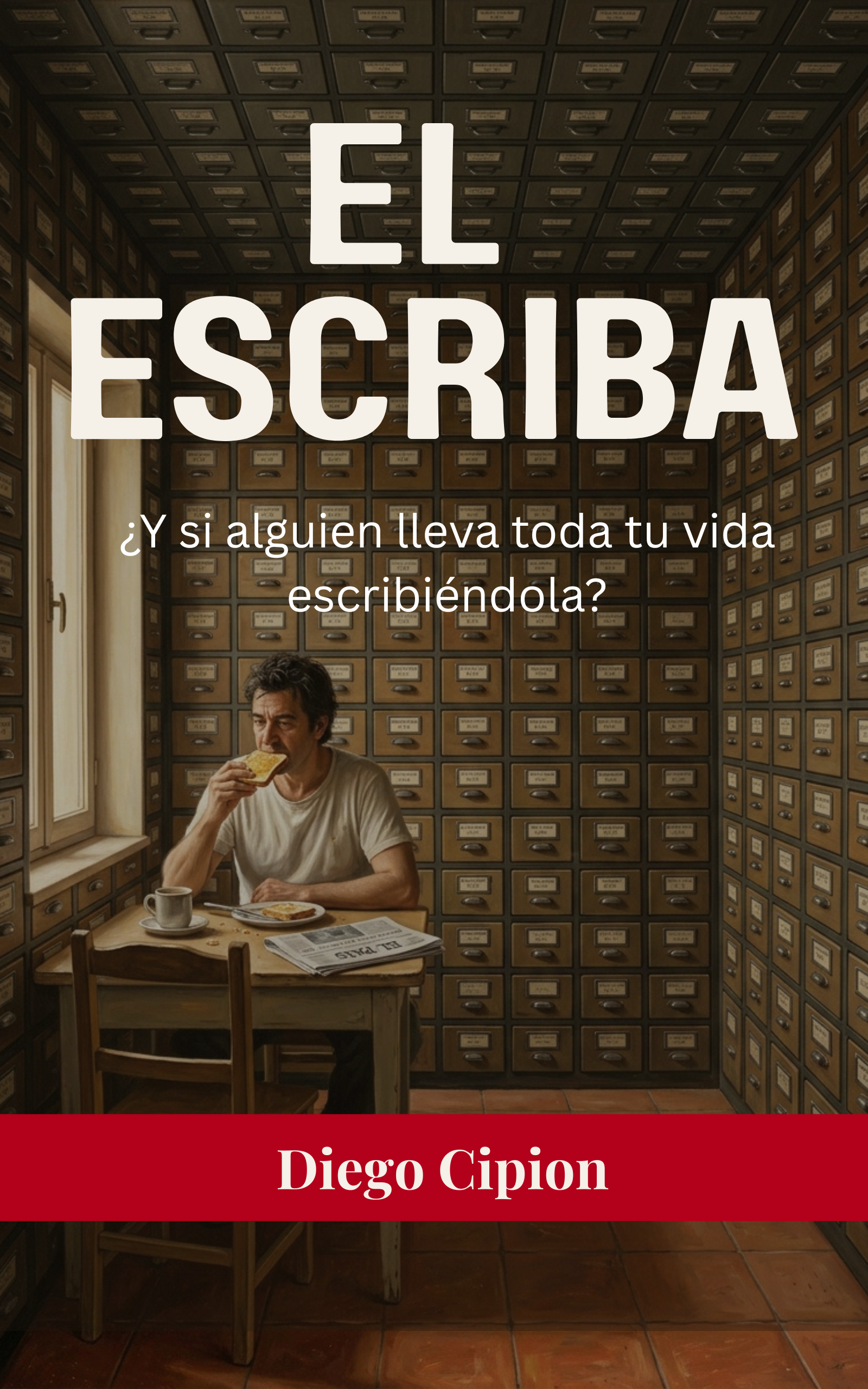
El Escriba / The Scribe
A short, precise book about what happens to your voice when you spend it making other people's ideas visible.
Read The Scribe on Amazon →El Escriba is about professional identity and the tension at the center of every service business: you spend your skill making other people's ideas legible. You are, in the most literal sense, a scribe. What happens to your own voice when it is spent entirely in that function?
This is not a complaint. Most of the most interesting professional work I have done has been in service of someone else's vision. But there is a difference between choosing to amplify someone else's voice and forgetting you have your own. The book lives in that gap.
Writing It in the Margins of Everything Else
The tension in El Escriba is the same one at the center of every service business. If it resonates, I write about it at Cipion Marketing.
Read more at Cipion MarketingI did not have dedicated writing hours for El Escriba. I had fifteen-minute windows between calls, late evenings after the client work was done, and the kind of fractured concentration you build when you know that if you do not capture something now you will lose it by morning.
This is not a romantic description of the creative process. It is the actual one. Most of the books I have read about writing describe a room of one's own, uninterrupted hours, a life organized around the work. That is not the life I was living when I wrote El Escriba. I wrote it in the cracks of a full schedule, and the constraint shaped the book. A book about economy of words should probably be written under conditions that enforce economy.
What It Has in Common with the Rest of My Work
The best brief I ever wrote was also a short document. One page. The client who received it was surprised. "Is this it?" Yes. Because a brief that is too long has not done its thinking. It has exported the thinking problem to the reader. The book that is too long has done the same thing. Clarity is a discipline. I learned it in the theater. I practiced it in El Escriba.
I work in marketing and GEO now, which means I spend a lot of professional time helping brands be found and cited in AI-generated answers. The discipline is the same: say the thing directly, structure it so it can be extracted, earn the citation by being the clearest answer to the question. El Escriba is the personal version of that same discipline applied to a question about creative identity. The form is the argument.
The Scribe (English edition) Available on Amazon → El Escriba (Edicion en espanol) Disponible en Amazon →